Crystal Uses · Gifts
Choosing Crystal Jewellery: A Practical Guide
Choosing crystal jewellery that lasts: which stones suit rings, necklaces and bracelets, how to read a listing and how to care for your pieces.
The Crystal Store · 22 October 2026
Good crystal jewellery suits how you’ll wear it: harder stones such as amethyst are better for rings and bracelets, while softer ones like moonstone and obsidian are safer as pendants and earrings. Beyond that, the best choice is a stone you love and a setting that protects it.
You’re also in good company. In an F.Hinds survey of 2,001 UK adults, 38% said that they use or wear gemstones regularly, and 42% chose their favourite for its colour or look.
Which jewellery suits which stone?
Rings and bracelets take the most knocks, while necklaces and earrings are far more protected.
| Piece | Exposure | Better choices | Be careful with |
|---|---|---|---|
| Rings | High | Amethyst, citrine, rose quartz | Malachite, fluorite |
| Bracelets | High | Quartz varieties, tiger’s eye | Soft stones, obsidian |
| Necklaces | Low to medium | Most stones | Very soft stones like selenite |
| Earrings | Low | Most stones | Very heavy pieces |
Why does this matter? GIA lists amethyst at 7 on the Mohs scale. GIA’s moonstone page gives 6 to 6.5, and Geology.com says obsidian is about 5.5, adding that it suits earrings, brooches and pendants better than rings or bracelets.
Geology.com also says that labradorite, at 6 to 6.5, can break from impact because of its cleavage. See our Mohs scale guide for a fuller explanation.
The main types of crystal jewellery
Pendants. A simple way to wear a favourite stone. They’re relatively protected, and they can show off larger stones. Browse our crystal jewellery.
Bead necklaces. These are colourful and often inexpensive. Check the quality of the thread and clasp.
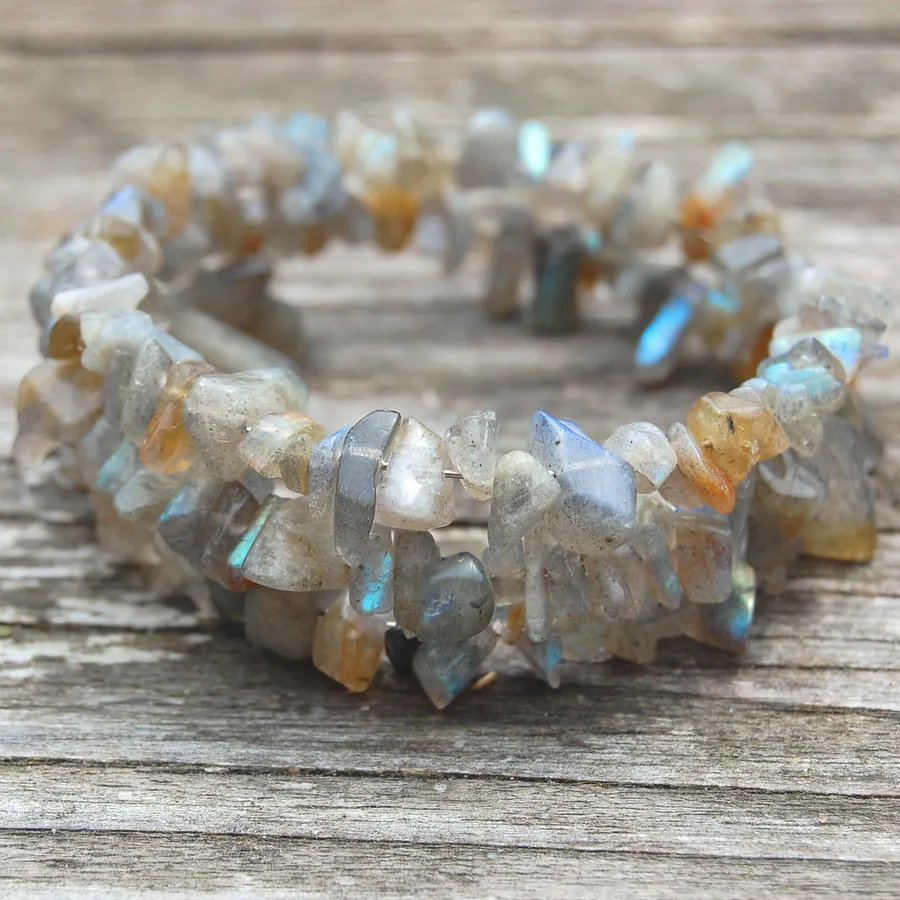
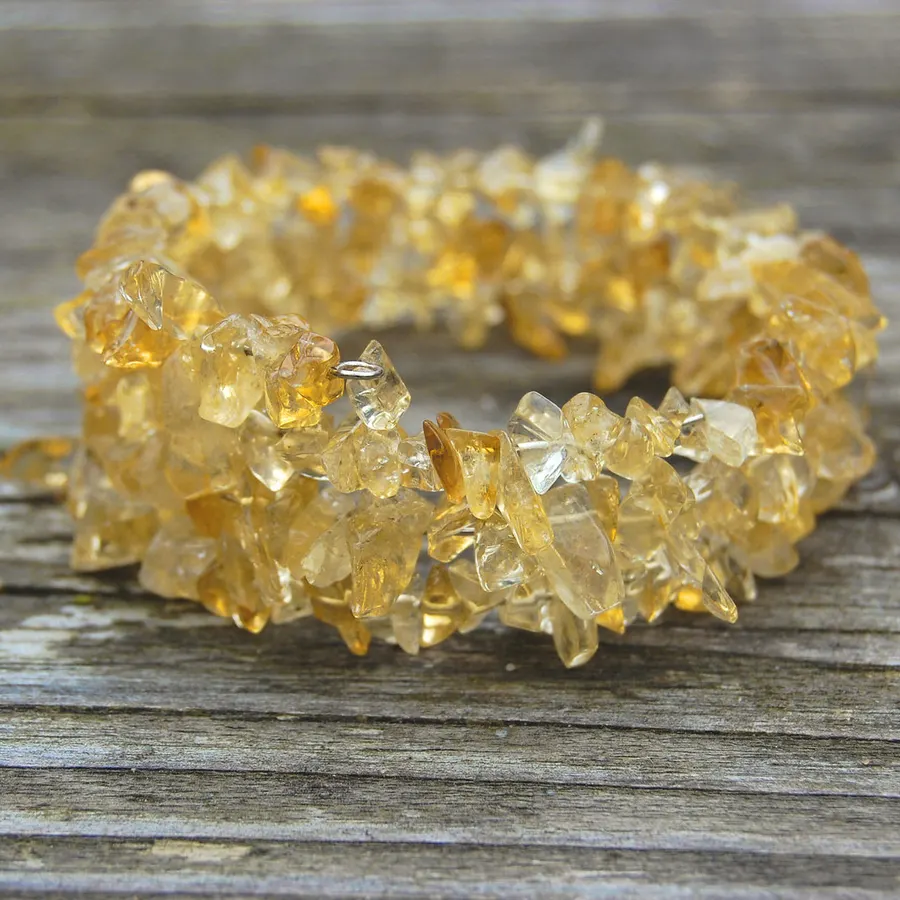
Bracelets. Crystal bracelets are popular, particularly the chip and bead types. Stretch cord can wear out over time, so roll them on and off rather than pulling at them.
Rings. Check the size, and choose a setting that protects the stone. Adjustable bands make buying online easier.
Earrings. A lightweight stone will be more comfortable to wear all day.
How to read a jewellery listing
A good listing should answer these questions:
- What’s the stone? Look for the actual mineral name.
- Is it treated? GIA’s guide says sellers should disclose treatments.
- What’s the metal? “Silver-tone” isn’t the same as sterling silver. Look for specific terms.
- Is it hallmarked? In the UK, silver over 7.78g must generally be hallmarked before being sold as silver.
- What are the measurements? Check its size, length and weight.
- What’s the fastening? Clasps and cords vary in durability.
- What’s the returns policy? Check before you buy, especially for gifts.
Sensitive skin
Metal allergies are common. If you have sensitive skin, look for nickel-free items, and ask sellers what their metal components contain. If you get a rash or irritation, stop wearing the piece and ask a pharmacist or GP for advice.
Crystal jewellery care
- Last on, first off. Put your jewellery on after perfume and hairspray, and take it off before bed.
- Remove it for activities. Take it off for sport, swimming, gardening and cleaning.
- Store pieces separately. A hard stone or a metal clasp can scratch softer stones.
- Clean it gently. Use a soft, dry or slightly damp cloth, and check for water sensitivity first.
- Avoid chemicals. GIA advises protecting dyed gems from solvents like alcohol and acetone, as well as prolonged sunlight.
- Check settings and cords. Have loose stones fixed, and replace worn stretch cord.
Our crystal care guide has more tips.
Choosing jewellery as a gift
- By birthstone: birthstones history and our birthstones by month guide will help.
- By meaning: browse our intentions, keeping in mind that they’re traditional associations.
- By colour: look at what they wear already.
- By budget: a simple bracelet or pendant can be just as thoughtful as an expensive piece.
Adding a small card that explains the stone’s story is a nice personal touch.
Wearing crystal jewellery for meaning
Some people wear a stone as a daily reminder of an intention. A rose quartz bracelet might remind you to be kind to yourself, or a labradorite pendant might simply make you happy when it catches the light. These are personal meanings. Jewellery isn’t a health product, and it doesn’t replace medical care.
Frequently asked questions
What is the most durable crystal for everyday jewellery?
Quartz varieties are a good choice, at 7 on the Mohs scale. They can still chip if knocked.
Can I shower wearing crystal jewellery?
It’s best not to. Water, soap and products can damage some stones, cords and metals.
How can I tell if a crystal necklace is real?
Check the listing, ask about treatments, and read our guide to spotting fake crystals. For valuable items, ask a qualified jeweller.